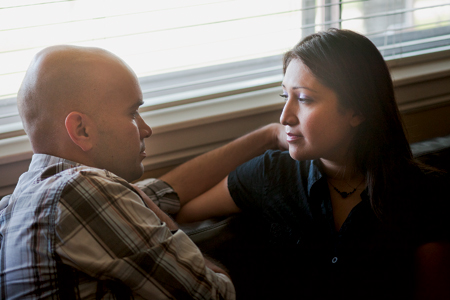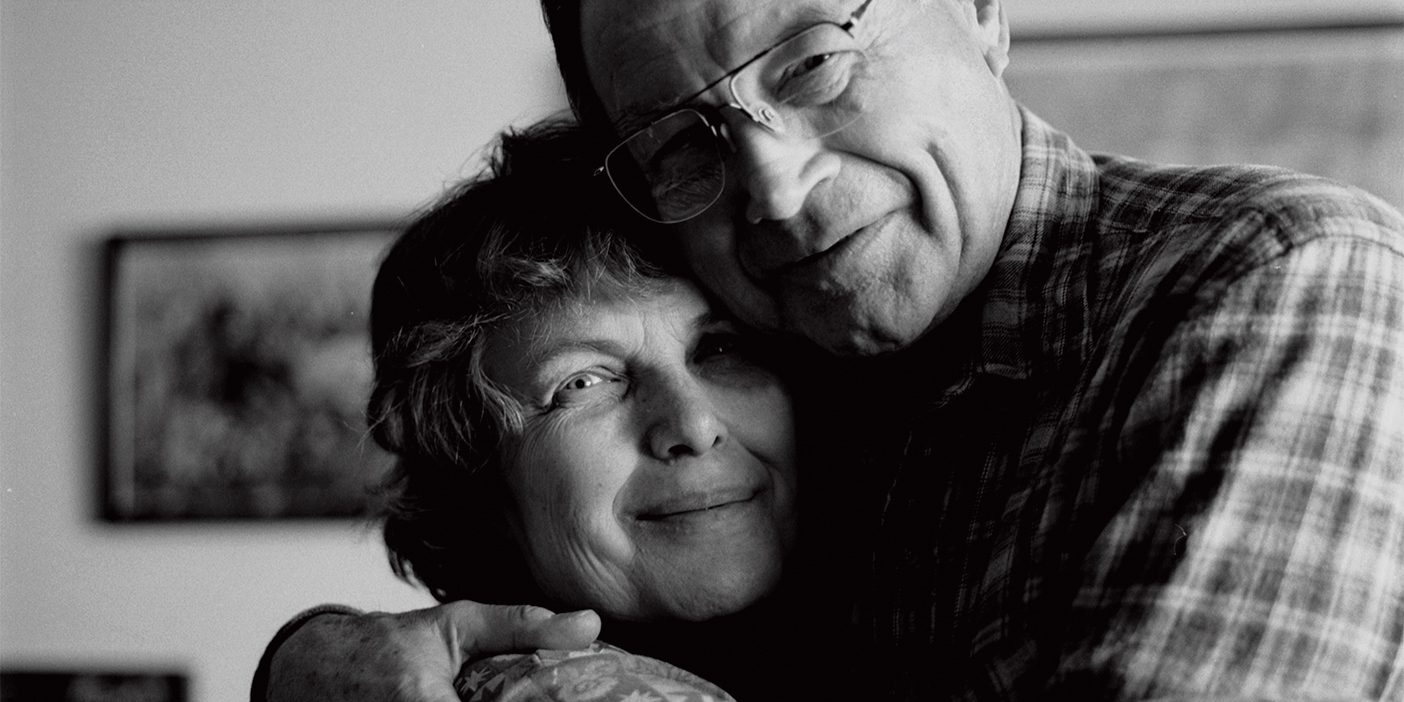





Exercising together strengthens more than just muscles.

THERE’S SOMETHING MAGICAL about summer walks with my spouse. The golden light on the mountains. The peaceful quiet. The chance to talk.
We rarely set out to solve anything. We’re mostly eager to get some steps in and chat. We talk about the kids. We talk about work. We talk about church.
As we approach our driveway at the end of the walk, something has happened. Our moods have changed. Listening comes more easily.
BYU researchers have noticed something similar in a new study that examines how exercise affects married couples. The study looked at communication, conflict resolution, and marital stress. Researchers analyzed data from nearly 1,700 young married couples as part of the long-running study.
“People reported more positive outcomes in communication and conflict resolution when they exercised together,” says BYU School of Family Life professor Jeremy B. Yorgason (BS ’97). Exercising together “facilitates, in a small but significant way, the ability to resolve conflict peacefully.”
Reaping these benefits doesn’t require you to spend thousands of dollars to build a home gym. The study found that the most common shared exercise among couples wasn’t intense gym sessions or marathon training. It was walking.
“Exercise had the biggest impact on communication,” student lead author Ashlyn Hiatt Mildenhall (BS ’24) says. “That’s why it was interesting that walking was the No. 1 reported exercise. It naturally provides opportunities to communicate.”
Exercising together may not magically solve relationship problems, but researchers suggest it can create something busy couples desperately need: time together.
Here are four simple strategies couples can consider to put this research into practice.
1. Lace up your walking shoes. Not every marriage conversation needs to happen over a table. The study found that walking was the most common form of conjoint exercise, and it naturally creates opportunities for conversation. Unlike sitting face-to-face during a difficult conversation or trying to talk over young children, walking side by side can feel less confrontational and more collaborative. Even a 15-minute walk after dinner can create space to reconnect.
2. Don’t overcomplicate it. Benefits come from any shared physical activity, not necessarily intense workouts. Not every couple needs gym memberships or elaborate at-home workout spaces. “The study highlights the point that simple activities still matter,” Yorgason says. “A bike ride, a walk around the neighborhood, or a quick trip to the park may be enough to create positive interaction and bonding.”
3. Use the time to talk and listen. The study found that better listening played a major role in improving communication. Couples who exercised together reported feeling more heard and supported. Shared exercise time can be less about fixing problems and more about understanding each other, says Yorgason. Instead of trying to solve every issue, couples can use this time to ask questions, listen with patience, and prioritize thoughtful conversations.
4. Protect time together. Most young couples face time constraints from work, school, finances, and parenting. Research suggests conjoint exercise may act as a protective factor against marital distress. For parents with young kids, that may mean getting creative. Find times that fit your family’s schedule, then ask grandparents to watch the kids or trade babysitting with friends.