The new medical school receives preliminary accreditation and releases renderings of its new home.
It’s official: the BYU School of Medicine will open its doors next year. The BYU School of Medicine has received preliminary accreditation status from the Liaison Committee on Medical Education (LCME). This major milestone allows the school to begin receiving applicants for its inaugural class, which will matriculate next July.
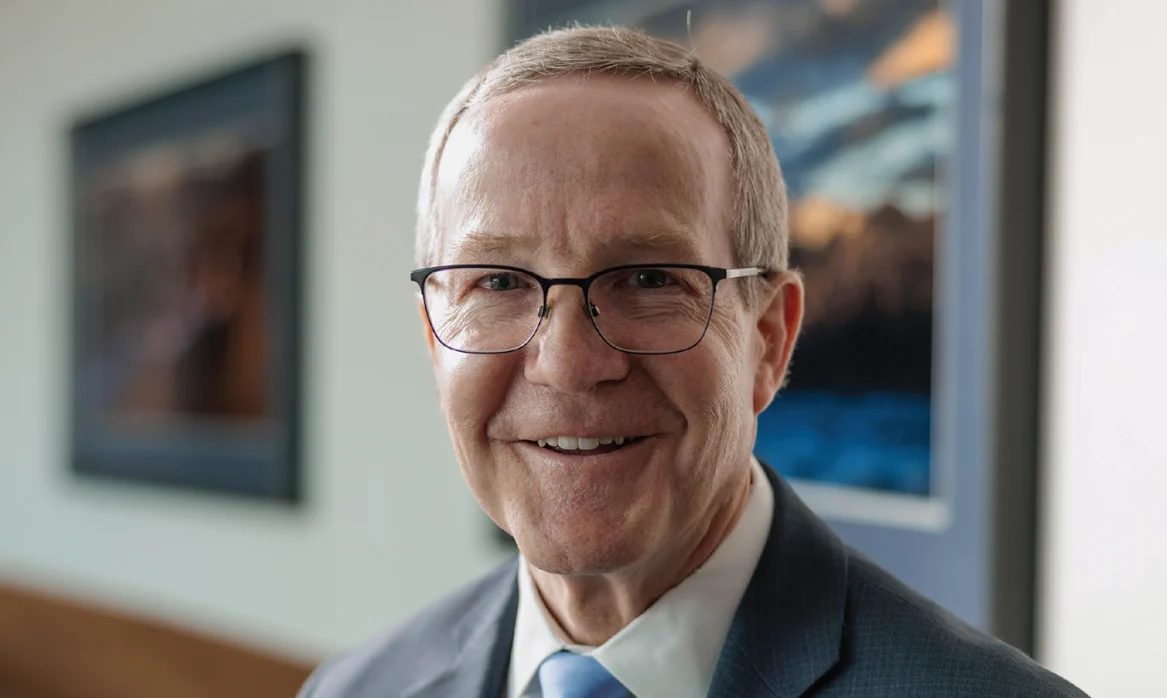
“Many people have sacrificed, volunteered, and worked tirelessly to bring us to this historic moment,” says Mark J. Ott, inaugural dean.
Following the July 2024 First Presidency announcement of the school, BYU hired Ott, who quickly gathered a large group of interested physicians and other professionals. These hundreds of volunteers formed 15 committees, working to draft the initial accreditation application of nearly 900 pages in a blazingly fast nine months.
The speed of the accreditation process was nothing short of miraculous, says BYU President C. Shane Reese (BS ’94, MS ’95). Industry experts had told him to expect it to take five years to receive preliminary accreditation and open the school’s doors. When he said BYU wanted to do it in just two, they said, “Good luck with that.” In the end, accreditation came in just over two years, and the inaugural class will begin only three years after the school was announced.

At the announcement BYU also released renderings of a 275,000-square-foot medical school building to be constructed on the west end of campus, near Intermountain Health’s Utah Valley Hospital, which will be the school’s primary medical affiliate. As the building is constructed, the medical school will operate out of BYU’s West Campus facility (formerly Provo High School), currently being remodeled to meet the needs of a medical school.
Architects drew inspiration from the Brigham Young Academy (now the Provo City Library) and the Provo City Center Temple. It will feature advanced medical education learning facilities, as well as spaces for the whole-person development of future physicians.
“This building was designed to be far more than a collection of classrooms and laboratories,” Ott says. “It will be another BYU temple of learning. Every aspect of the building is intended to support the formation of physicians who are not just academically prepared, but spiritually grounded and committed to a higher standard of care as disciples of Jesus Christ.”


President Reese says that the BYU School of Medicine will offer “a distinctive approach to medical education rooted in faith, rigorous academic preparation, and service.” Preliminary accreditation, he says, is the next step to fulfilling “a prophetic vision of preparing physicians who will bless individuals, families, and communities throughout the world.”