




A Florida educator harnesses fun to launch students into out-of-this-world science.
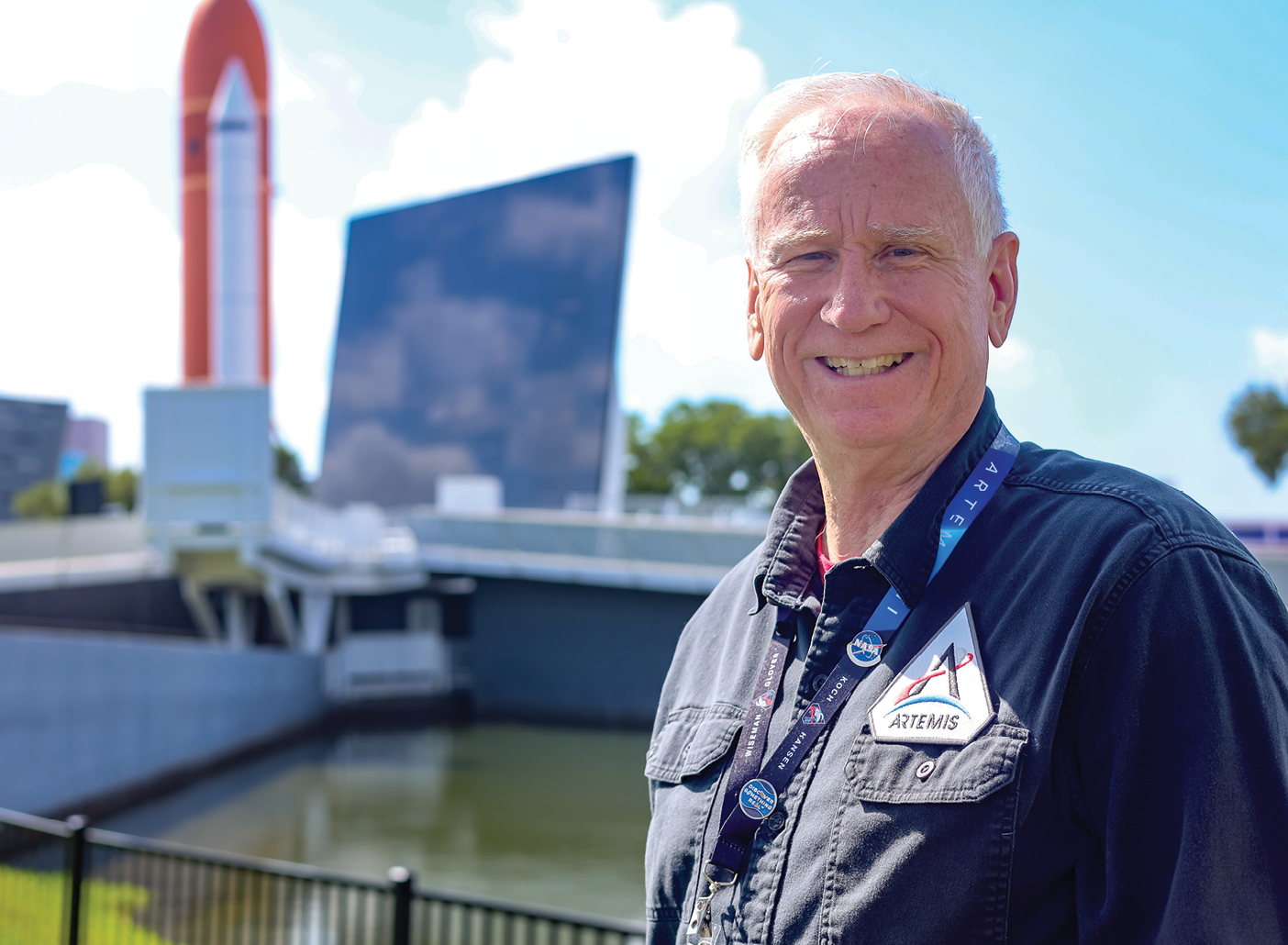
“I’ve got all the toys,” says nationally recognized STEM educator Stephen M. Portz (BS ’88). It’s something his students love about him. In his 38-year career, Portz has taught students from kindergarten to high school in both public and private school settings, but one thing has stayed consistent: he brings the fun.
His favorite classroom toy might just be his 3D printer—which his students have used to print rockets and robots and machines. Some of his students even designed satellites that were launched into space.
Having grown up on Florida’s Space Coast, it’s no wonder that Portz gravitates toward space science. He was 7 when Neil Armstrong first set foot on the moon. “Back then,” Portz says, “everything was about space.” He remembers the excitement of huddling with his family around the TV as they watched the moon landing.
He got his first NASA job just out of high school, working on the Space Shuttle Columbia as a thermal protection mechanic. Now, after teaching secondary education for decades, he has returned to NASA as an educator.
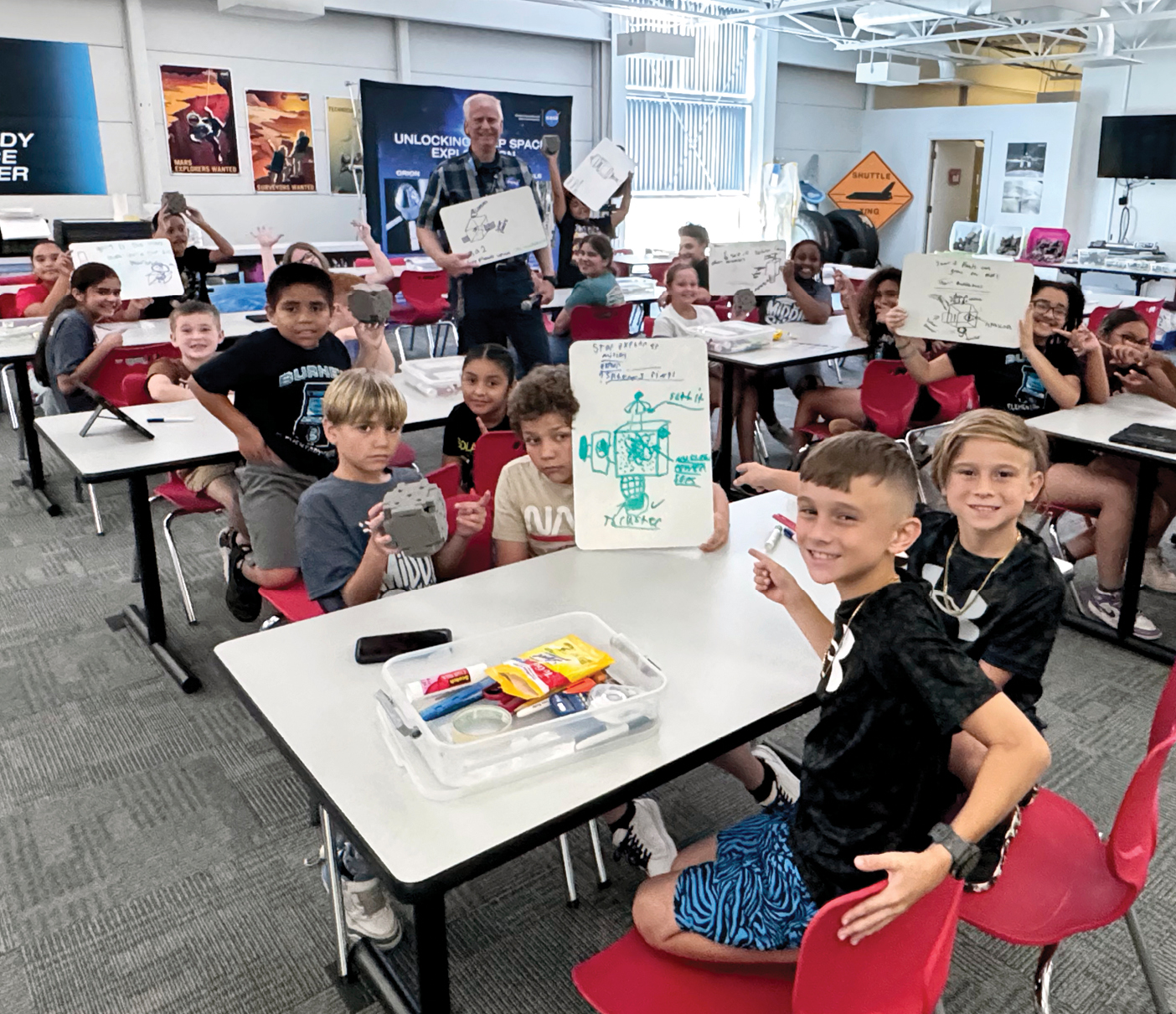
Portz is the lead educator for the Astronauts Memorial Foundation, a living memorial dedicated to fallen astronauts who died in the pursuit of discovery. Portz and other NASA educators teach free classes on space, science and STEM to kids who visit the Kennedy Space Center on school field trips.
Portz first discovered his love for teaching while serving the Navajo people during his mission in Northern Arizona. “ The thrill of teaching people stuff was just so cool,” he says. Helping people have that “aha” moment through teaching, says Portz,“gives me tingles up my spine every time.”
But it wasn’t until he was an undergraduate at BYU sitting in an engineering design class that Portz realized he needed to be an educator. His professor,Wilford J. Tolman (BS ’60, MS ’64), told the students that they’d never regret getting into teaching.
“It felt like he was just talking to me,” says Portz, who changed his major to industrial education that very week.
Throughout his career, Portz has helped expand the boundaries of middle and high school STEM education. In 2004 he was the first in Florida to put a 3D printer in a high school class, allowing his students to innovate with the new printing technology. Using the 3D printer, one of his former students, then at college, developed a novel device to stay connected. Using Wi-Fi, paired electric candles each light up when one is touched, no matter how far apart.
In 2019 a student robotics team led by Portz was one of 20 teams chosen (from 36,000 entrants) in the Global Innovation Awards for its invention—a“palm socket” tool used to assist astronauts in space.
For years Portz had considered applying to become an Albert Einstein Distinguished Educator Fellow, one of the most prestigious positions a teacher can receive. But with his busy personal and family life, it never seemed like the right time. However, when counseling with students, he always said they could accomplish whatever they wanted, and he realized he wasn’t pursuing his own dreams and modeling what he encouraged his students to do. In 2013 he took the leap to apply for the fellowship and was accepted.
Portz has received many honors over the years, but his focus is helping students discover their self-worth and find career success.
“Being with young people . . . keeps you young,” Portzsays. “I have so much fun with them.” His favorite thing is helping his students transform an idea into a digitally designed model and eventually into a real-life working part. “It doesn’t get much better than that,” he says.