




Using Kodály teaching approaches, a music educator helps learners of all levels use the musical instrument of their voice.

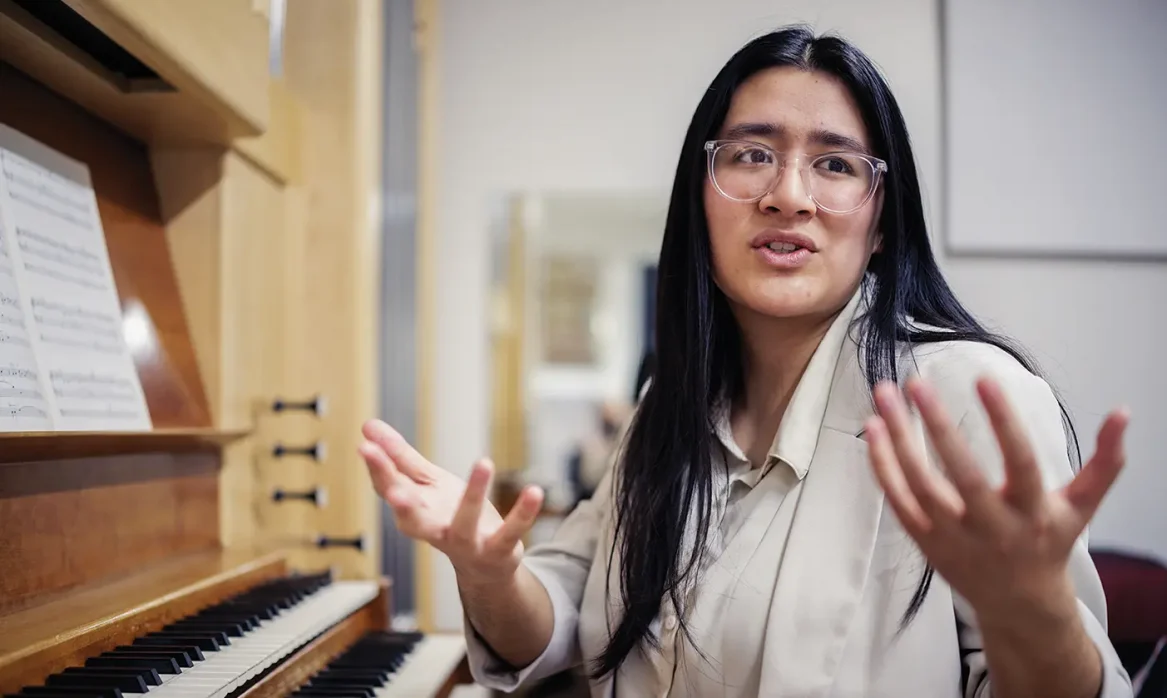
To Rebecca Cluff McLaughlin (BMu ’97, BS ’97), music is “not just for the rich who can afford private lessons, but it should be for every single person. Everyone is inherently musical.”
McLaughlin is the program director at the BYU InterMuse Academy for Kodály Certification, a graduate course for music teachers, sponsored by BYU Continuing Education and endorsed by the Organization of American Kodály Educators. Outside of InterMuse, she has worked with many students who are insecure about their voices, “who won’t even sing the hymns in church” or who feel they can’t sing to their child because their voice isn’t “good enough.”
The Kodály system helps her give students the confidence to participate in and understand music. Zoltán Kodály (1882–1967), a Hungarian composer and musician, believed that learning music should be joyful and accessible to everyone. He said that “powerful sources of spiritual enrichment spring from music. We must spare no effort to have them opened for as many as possible.” He developed a method of music study that emphasizes students’ voices as their first and most important instruments. A Kodály-style class begins with folk songs and singing games. From there, music concepts are slowly extracted until students learn to read music using their voice.

“You become a truly independent musician when you don’t rely on your instrument to give you the music—when you can have the music completely inside of you,” McLaughlin says.
McLaughlin saw the impact of this approach when she had an unusual experience teaching an eldely woman at InterMuse. The woman confessed to McLaughlin that though she’d loved and taught music her whole life, she’d never been able to read music herself. Having had a similar experience when she was younger, McLaughlin took time to work with the woman one-on-one.
A week and a half into the two-week InterMuse course, McLaughlin handed this woman a new song that she hadn’t yet learned. “She looks at it and gets tears in her eyes,” McLaughlin remembers. Worried that she had overwhelmed her student, McLaughlin asked if she was okay.
“I could hear that song,” the woman told her. “For the first time in my life, I picked up a piece of music and I looked at it and I could hear what it sounds like.”
This, says McLaughlin, is the transformative power of music and effective music teaching. “Music is an important part of everybody’s life, regardless of if it’s your profession or not,” she says. “It is . . . part of being a human.”
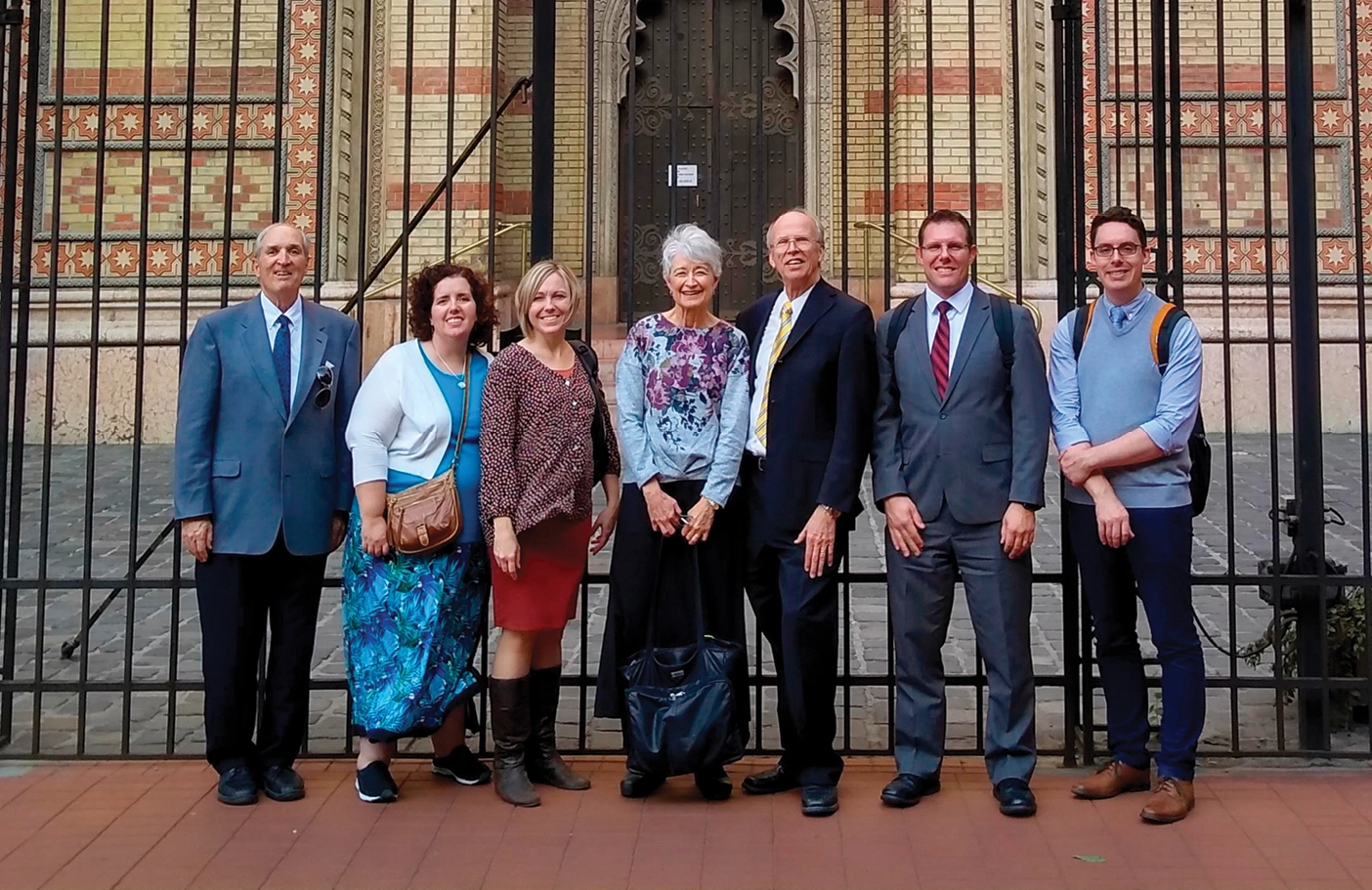
Although she’d been a lifelong singer and musician, McLaughlin didn’t feel like she truly understood music until taking a Kodály-education class at BYU from Jerry L. Jaccard (’68), then a BYU music professor and the founder of InterMuse. Jaccard calls meeting McLaughlin “an answer to prayer.” Not only was she already a talented musician, but he saw her as “a natural leader.” While at BYU McLaughlin and a few of her classmates organized the hosting details of a national conference of the Organization of American Kodály Educators on BYU campus “despite their own schoolwork, rehearsals, and practice demands,” Jaccard recalls.

After learning the Kodály system, reading written music came naturally to McLaughlin for the first time in her life. “It was simple; it was easy,” she says. “I really fell in love with this approach to teaching music.”
It has guided her teaching ever since. After graduating with degrees in music and elementary education, McLaughlin became Provo City School District’s first full-time elementary music specialist and eventually served as the district’s Kodály program teaching coach. Now she oversees the Kodály-trained teachers at InterMuse as program director, and she works to bring Hungarian professors to campus each year as special guests. “Because of her steadiness and considerable self-sacrifice,” says Jaccard, “InterMuse is still afloat and sailing forward in its 30th year,” despite economic, enrollment, and policy challenges.
Ultimately, McLaughlin says she wants to give people the confidence “to participate in music, to understand it, to sing.”
She has seen the power of the human voice to create connection. “Your voice is something that’s uniquely yours,” she says. Music is not “just music—it is actual human-to-human connection.”
“I have seen music help people overcome trials,” she says. “I’ve seen it give them courage. I’ve seen it bolster their faith. I’ve seen it bring peace in times of turmoil. I’ve seen music bring healing.”