




BYU roots have shaped every part of the new BYU Alumni Association president’s life.
The acorn doesn’t fall far from the tree, right? New BYU Alumni Association President Derek B. Miller (BA ’95, MPA, JD ’98) is part of a veritable grove of trees that have taken root and flourished in BYU soil.
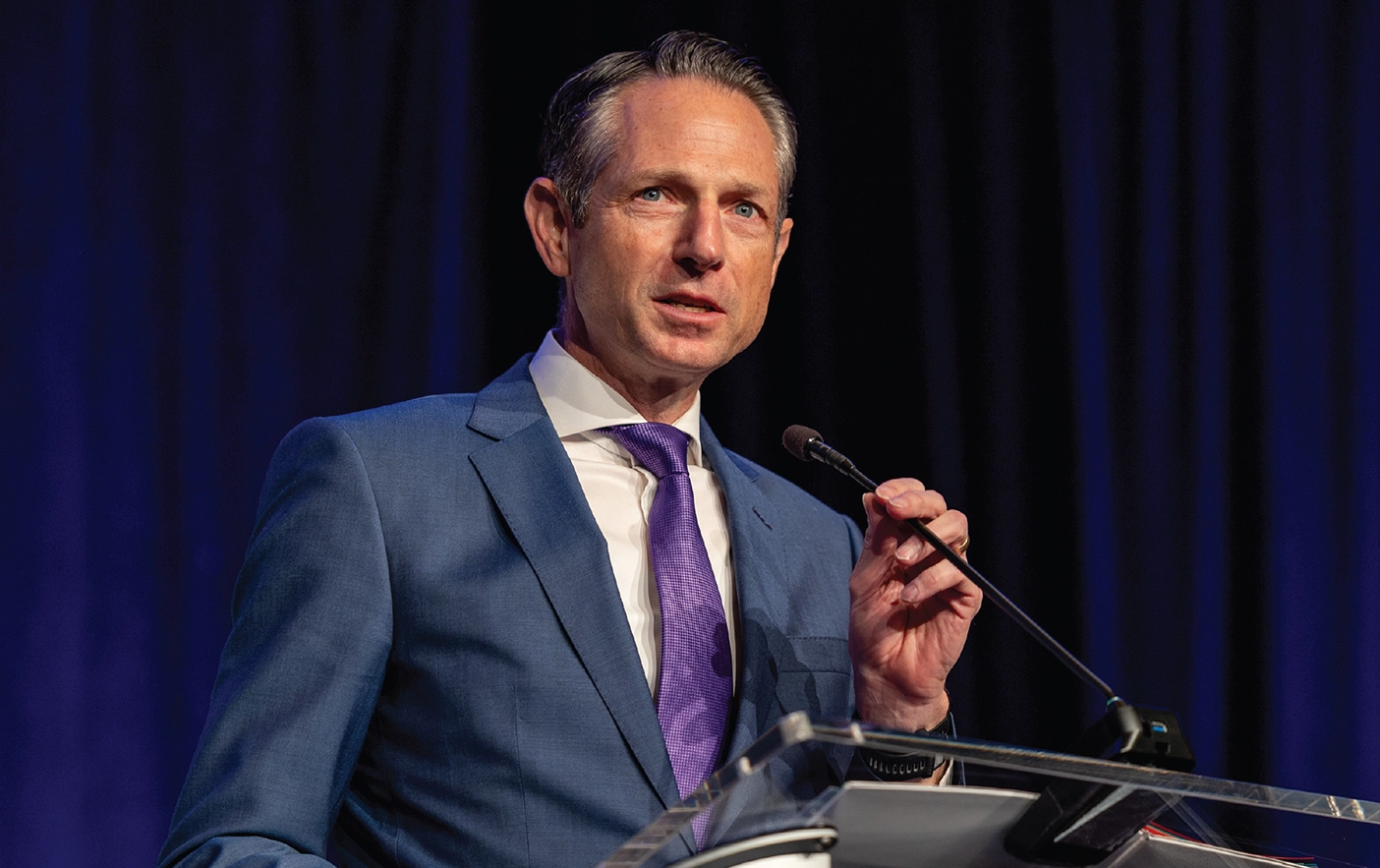
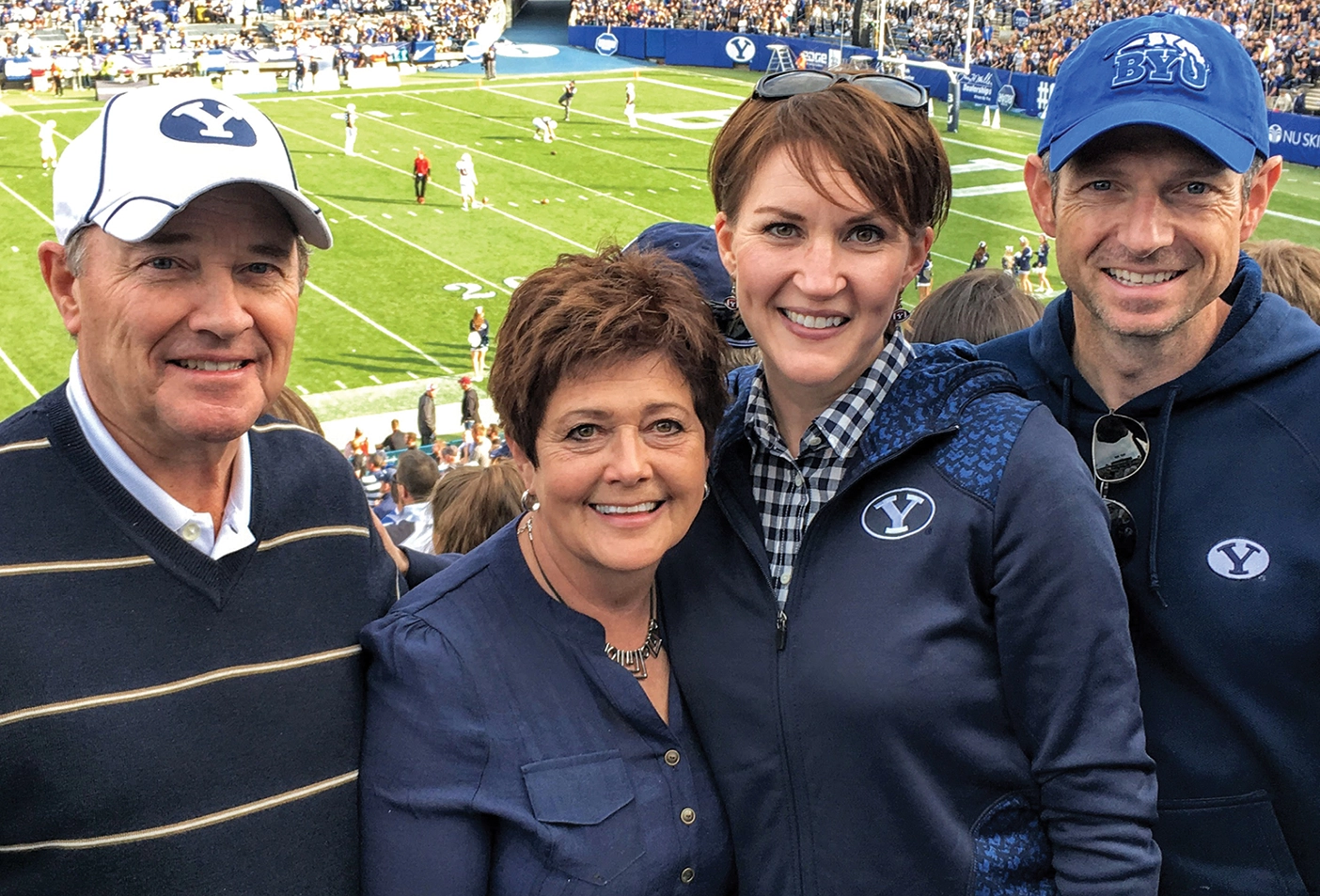
His great-grandfather played on the first Brigham Young Academy football team in 1896 (beating the YMCA, Elks Club, and University of Utah in the regional championship). His grandparents met and married at BYU; his mom and dad were BYU professors; he and his six siblings all attended; he met his wife, Laura Best Miller (BS ’96), a professor’s daughter, at BYU; and one of their children attended BYU.
BYU love is highly concentrated in Miller, who says his career and faith are deeply rooted in the university and its mission. “It’s hard to separate BYU from my life,” he says, “because it’s been part of my life since I was born.” And it has influenced him long since earning his BYU degrees.
Miller has been involved in public service for most of his career, beginning as a management consultant and then as legal counsel in the US House of Representatives. He later helped lead the Governor’s Office of Economic Development for Utah Governor Jon Huntsman, served as chief of staff to Governor Gary Herbert, and led World Trade Center Utah. He is the current president and CEO of the Utah Chamber.
All of that stemmed from a chance conversation with a friend in his BYU married student ward who shared what he was learning in his master’s of public administration (MPA) program.
“I didn’t even know what an MPA stood for,” says Miller, who had studied international relations following his mission to Belgium. He was two weeks away from beginning a PhD program in Oregon, following his parents into academia. The friend “was telling me about finance and business processes and budgeting—things that, as an international relations major, I had no idea of.”
Miller says something about the conversation “pricked my heart,” and he couldn’t stop thinking about it. So, on a Friday afternoon during summer break, he went looking for an MPA professor. “I was lucky someone was there. She said if I brought in my PhD application, they would review it, even though school classes were starting in less than two weeks.” He was accepted, and he later added on the joint JD. “[The program] changed my whole life—not just the course of my life—but my whole life. The Lord put a single person in my path who told me something that touched my heart.”
When Miller shares this story with young people, he relates that “most of the time in life, you’re just changing things by degree, little nudges by the Spirit in imperceptible ways. But sometimes you get a course correction, a total shift in direction.”
Having planned on a professorial life, public service felt foreign to Miller. Miller’s home growing up was “totally apolitical,” he says. “Politics was taboo.” When, as an 8-year-old, he asked his mother whom she’d voted for in the 1980 Reagan/Carter race, she said, “It’s none of your business.” To the same question, his father told him he’d written in Spencer W. Kimball’s name.
But other experiences inclined Miller differently. His family moved into a Provo ward that had many BYU political science professors. One such professor, Earl H. Fry (BA ’71, MA ’72), became a mentor to Miller. And in law school, Kevin J Worthen (BA ’79, JD ’82) taught a state and local government class that piqued Miller’s interest.
The 9/11 tragedy sharpened Miller’s focus again. As a consultant in Washington DC, he saw the burning Pentagon from his offices and learned that a man who lived across the street from him, a husband and father, had died in the Twin Towers. “I felt something change inside me,” he says: “a change from the public sector to public service; a change from making an organization work better to a focus on the organization’s mission and how it is helping people.”
His first project as legal counsel in Congress was for a committee laying the legal groundwork for aviation security—the TSA as well as the Department of Homeland Security, neither of which then existed. The work was difficult, but it taught him weighty life lessons, including exercising faith in the Lord.
“I hadn’t practiced law; I hadn’t been involved in politics,” he remembers. “I went into it as green as green could be, and I felt it when I realized that a big part of my job was to negotiate against these type-A attorneys from places like Harvard and Yale and Princeton.”
He prayed earnestly, and the Spirit led him to D&C 121, which describes leadership principles of love and patience, “the complete opposite of the experiences I was in every day.” He printed the verses and taped them to his bathroom mirror so he could read them while he put on his suit and tie. “I thought it would help me change [those attorneys],” he says. “It didn’t, but it did change me.”
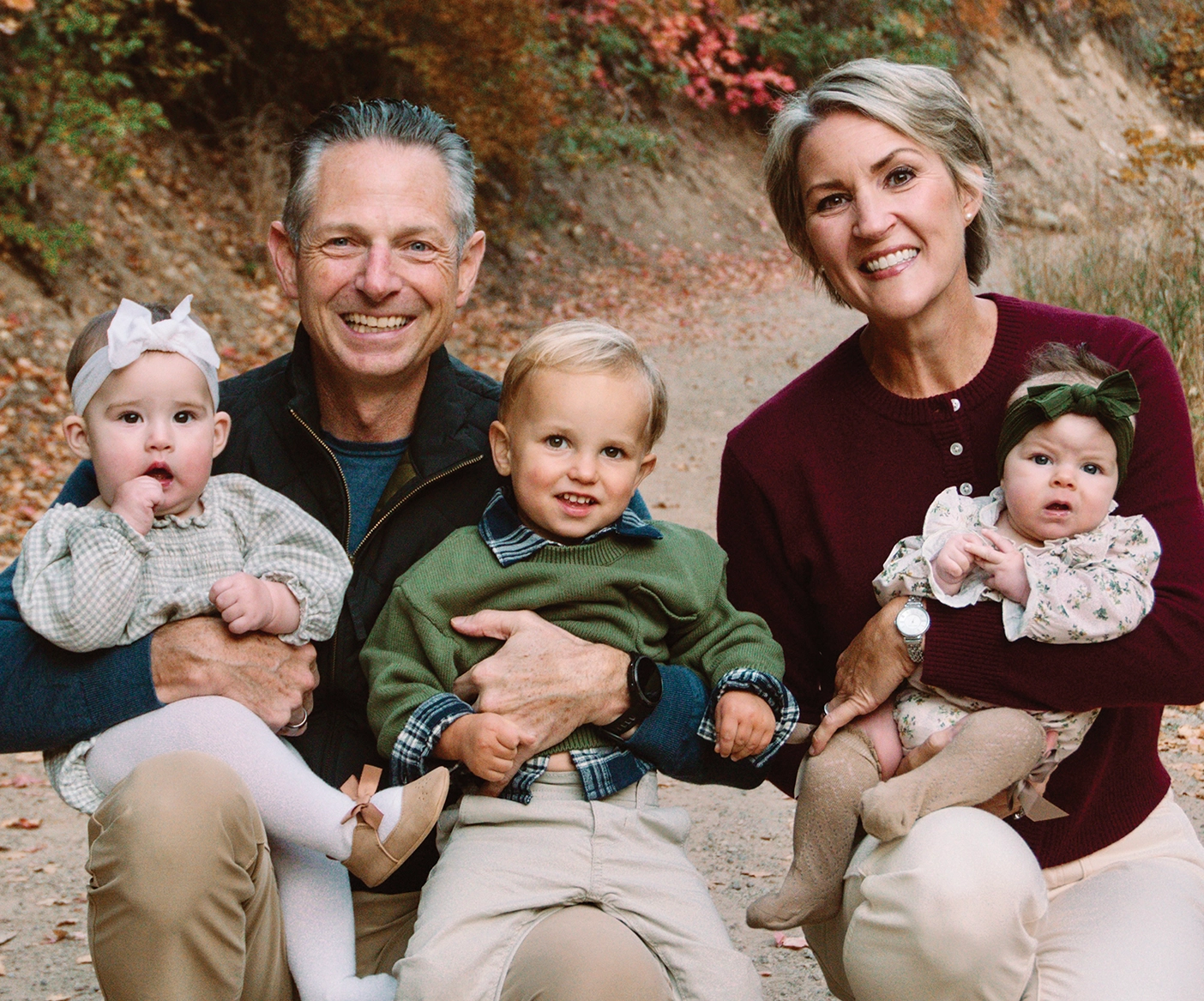
Miller also found support from the people who matter most. “My wife was my greatest counselor and champion,” he says. “It is a great gift when someone believes in you, but it’s an even greater gift when somebody helps you to believe in yourself, and that’s what Laura did for me.”
Miller attributes many of his blessings—like finding Laura and his career—to his BYU roots: “What I want to trumpet from the rooftops to every student and alum is this: the opportunity to pair the secular and the spiritual, to study . . . what is happening in the world in an environment that is Christ-centered and prophetically directed is just unlike anything else or anyplace else.”
That moral foundation has served Miller well as he now aims, in turn, to serve BYU’s nearly half million living alumni.