




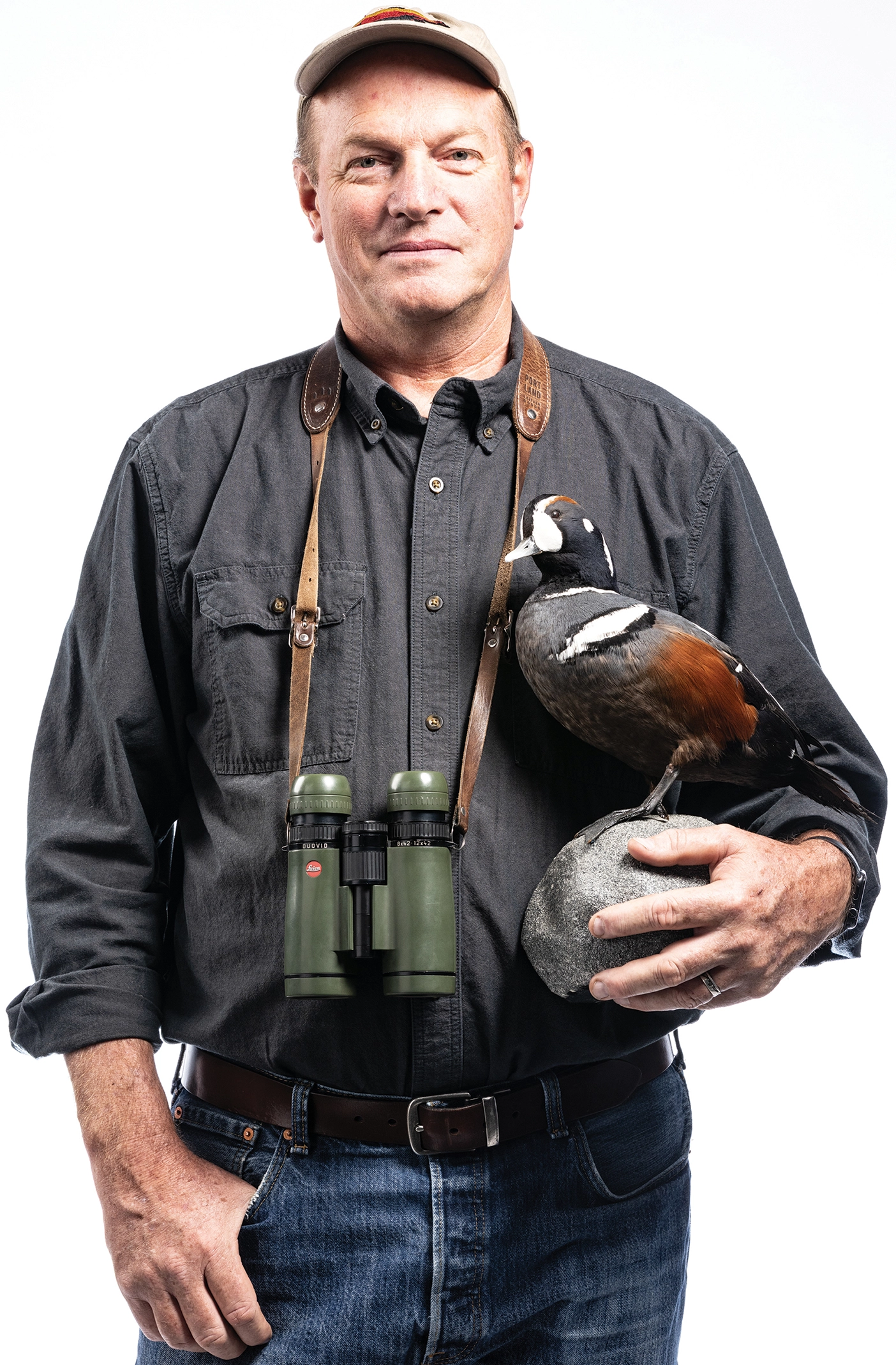
Steven L. Petersen (BS ’93, MS ’97) has always had a passion for birds. He remembers birdwatching alongside his mom when he was little and carrying binoculars and a local birding book on his mission in Germany as a young adult. He has seen and documented more than a thousand distinct bird species.
Today, as a BYU professor of plant and wildlife sciences, Petersen spreads his enthusiasm for birding to students and others. “It’s contagious,” he says. “If you’re causal, you’re called a birdwatcher. If you’re serious, you’re called a birder. My goal is to get you to become a birder.”
What equipment do you need to start?
A: All you need to begin are a good pair of binoculars and a resource to guide your exploration, like a region-specific birding book or an app like Merlin or Ebird. Merlin helps bird enthusiasts identify birds with photos and recordings of different species’ calls, while Ebird helps people compile their observations into a list that can be shared with others, increasing awareness of bird locations and rare sightings.
What do you watch for while birding?
A: Each bird species has different adaptations and characteristics based on where they live. Emerging birders can think about what each species is adapted to—living in water? Being in trees? Out in the grasslands? You should also watch out for unique colors; size; markings; and characteristics of the bill, wings, and head. Once you become mindful of these differences, it’s hard to unsee them.
When is the best time of year to start?
A: Birding can take place in any season, wherever you happen to find yourself in the world—and it’s free! The diversity in bird species varies widely from state to state, and they’ll come and go as they migrate. What you see in one place now might be totally different from what you’ll see in two months.