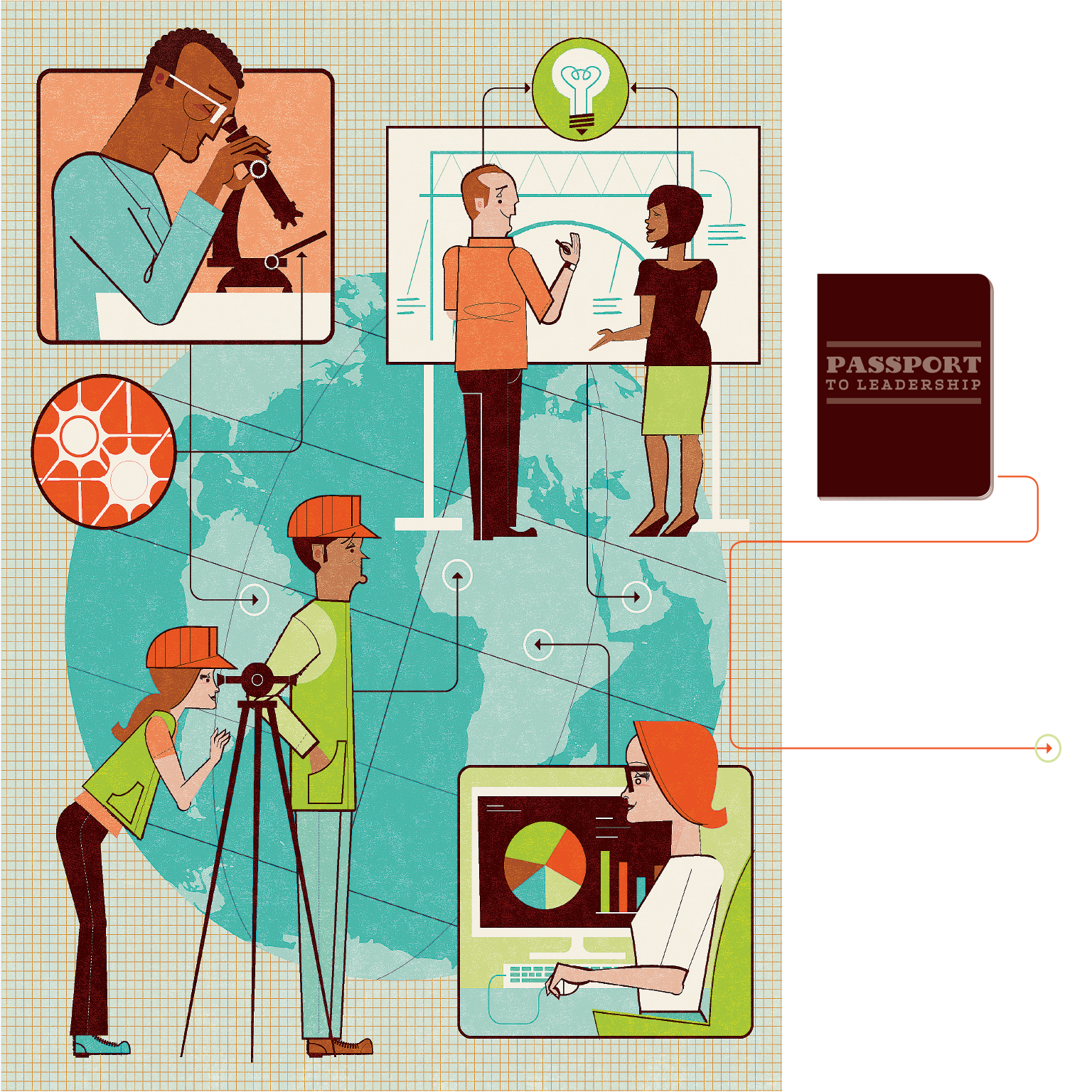






“Matchmaker” may not be Dave M. Brown’s (BS ’99) job title, but it is a big part of what he does as director of BYU’s Tech Transfer Office. Brown and his team match BYU researchers with student entrepreneurs and coders, giving professors the resources to turn their ideas into marketable, patented products.
BYU ranks among the top universities nationwide for most issued patents, and over half of those list students as coinventors. That’s by design, says Brown. BYU and its students, he notes, are uniquely entrepreneurial.
Brown looks beyond the sciences and reaches out to faculty in fields not traditionally producing patents. “Every professor on campus is doing something inventive,” Brown says. “If you’re a BYU employee, no matter where you are, you could be an inventor.”
The Tech Transfer Office is turning faculty research into student-driven projects all the time—learn about three of them here.
MoneyTalk
MoneyTalk, based on family life professor Ashley LeBaron-Black’s research, helps couples improve their financial unity and communication. Tech transfer student Jayden J. Flake (’27) did initial coding for MoneyTalk before turning it over to graduate student Benjamin P. Diehl (BS ’25). Users will be able to sign up for a monthly subscription and potentially get discounts for completing the learning modules. “It’s trying to incentivize actually improving the couple’s financial relationship,” says Diehl.
Time Warp Sports
Over a decade ago, now-retired computer science professor Dan Olsen filed a patent for Time Warp Sports, an interactive, multi-angle live sports viewing platform methodology. This past year, the idea caught student coder Christopher J. Markstaller’s (’26) eye, and he got to work creating a mobile app for fans. Users can select different camera angles, rewatch plays of their choice, or view a play in slow motion. At live games, fans “contribute to the stream,” says Markstaller, by uploading videos of the games from their phones and swiping through others’ videos for a different angle of a play. The platform is still a work in progress.
WorkCue
When tech transfer student employee Calvin D. Blood (’28) reached out to nursing professor Adrianna Watson to discuss the potential of a mindfulness app for nurses, she jumped at the opportunity. WorkCue is based on Watson’s research and helps nurses transition out of “nurse mode” at the end of their shift through breathing exercises and meditations. “To have a student who proactively reached out to me and said, ‘I’ve read your work, I think there’s potential here,’” says Watson, “that was so validating to me as a researcher.