Do Gooding
In its 150th year, BYU is marshaling the efforts of students, faculty and staff, and alumni everywhere to serve. Are you in?
By Brooklyn Hughes Roemer (BA ’22) in the Winter 2026
Layout photography by Bradley H. Slade (BFA ’94)
On Sunday afternoons special education major Paige R. Merkley (’27) drinks rootbeer floats and chats with her elderly friend in an assisted living home as part of the Adopt a Grandparent Y-Serve program. On Mondays and Wednesdays Merkley TAs for StDev 290: Learning Through Service. On Tuesdays she teaches dance moves to individuals with intellectual and developmental disabilities as a program director for Y-Serve’s Adaptive Show Choir. On Thursdays she prepares the choreography for the Adaptive Show Choir dances. On Fridays she eats lunch with unhoused community members at the Food and Care Coalition. On Saturdays she dons her athletic gear to volunteer with the Special Olympics Collegiate Teams program. And in between it all, she attends classes and studies for midterms.
“When we make time to serve, everything that we need to get done that day will get done,” she says. “It might not be everything that we had planned or we had wanted, but it is what Heavenly Father needed us to do.”
Merkley is one of thousands of BYU students and alumni taking the call to “Enter to learn; go forth to serve” to heart. As part of BYU’s sesquicentennial celebration, BYU community members have been challenged to complete 150 hours of service by June 2026, logging their progress in the BYU 150 Passport (on the Goosechase app).
Coral Taylor (BS ’07, MPA ’14), BYU Center for Service and Learning (Y-Serve) community service coordinator and member of the BYU 150 service planning committee, has been watching the service entries roll in. “A lot of it is even right in their own families, whether it’s caretaking or going to mow Mom’s lawn,” Taylor says.
Merkley volunteers at the 150 service booths on campus and loves explaining the challenge. “It doesn’t have to be a big project to serve,” she tells students and faculty. “It can just be serving in your calling in your ward or attending the temple or taking cookies to a neighbor. That counts towards this goal of reaching 150 hours.”
From pear picking to shoe sharing, BYU students, faculty, staff, and alumni are celebrating through service this year, building on a legacy 150 years in the making, beginning from the founding of BYU. Here we’ve collected an assortment of service projects and kind acts from BYU community members who serve in Provo and beyond. Taylor says it’s a reflection of the faith so prevalent in this community. “They want to serve because they want to continue with what the Savior has shown them,” she says. “They serve because they love Him. We see that every day.”
JOIN IN: It’s not too late to join the challenge and log your 150 hours of service. Download the Goosechase app and search for “BYU 150.”
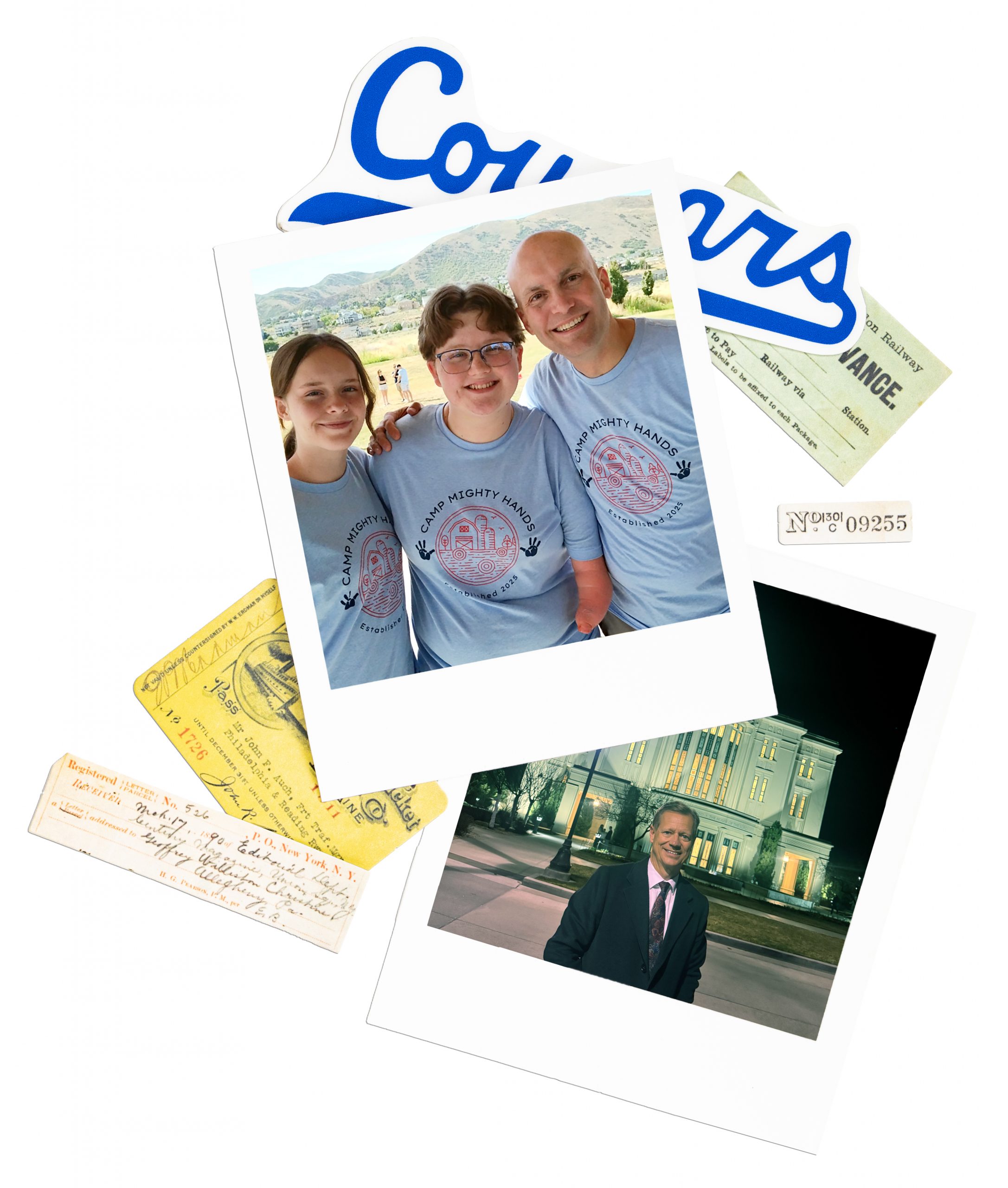
Top: Andrew T. Bracken (BS ’99), an occupational therapist specializing in pediatric hand therapy, organized and cosponsored a camp for kids with congenital or traumatic hand conditions. Photo courtesy Andrew Bracken.
Bottom: Religious education professor Robert I. Eaton (BA ’87) served in the Payson Utah Temple. Photo courtesy Rob Eaton.
A History of Helping
BYU students with shovels, plows, and big dreams have been building service into the BYU experience from the very beginning. Students fundraised and donated money to help purchase Temple Hill in 1904, gave lunches and labor to construct the first stadium in 1928, helped raise $25,000 toward a stadium house in 1936, and gave 4,439 hours of labor to build the Joseph Smith Memorial Building in 1939. Faculty members donated large portions of their salaries to build the Karl G. Maeser Memorial Building in 1911 and keep campus afloat in the early years.
“There’s a real connection to service here,” Y-Serve director Christopher J. Crippen (BS ’99) says, “because it’s built into the expectations as a BYU student. . . . This is what we do, and this is what we’ll continue to do.”
Even the white Y on the mountain is a beacon for service. Beginning in the early 1900s, BYU students armed with buckets of white lime powder—and later white paint—hiked the mountain each spring for Y Day, repairing and repainting the iconic Y on the mountain, cleaning up the trail, and later expanding the tradition into a community service day, cleaning city parks, clipping grass in cemeteries, washing windows, repairing widows’ homes, and clearing walks. “We are very happy with the arrangement we have on Y Day,” said Provo Mayor Verl Dixon in 1970, “because the students become more conscious of city problems and they become more identified with the community.”
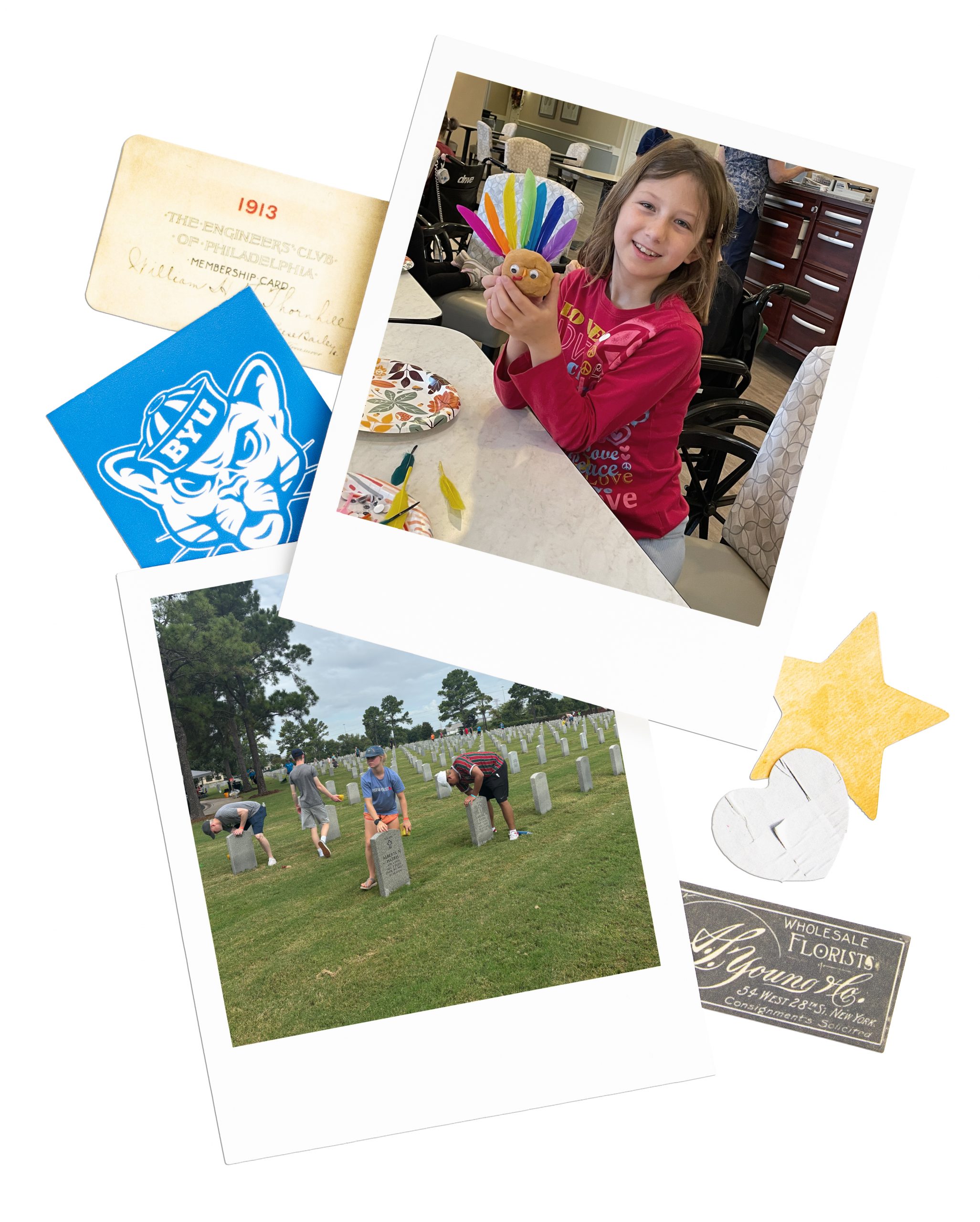
Top: Katie Hamson Eubank (’08) and her children visited a local nursing home to read books, play games, do crafts, and share snacks as part of an intergenerational playgroup called Young at Heart. Photo by Katie Eubank.
Bottom: Diane Beck Hunt (BS ’01) and her family spent two hours cleaning headstones marking the graves of veterans at the Houston National Cemetery as part of a 9/11 service week. Photo by Diane Hunt.
Why Serve?
Chris Crippen sat with his wife, Sherelda L. Crippen, in the Smith Fieldhouse, watching BYU students sing and dance next to their friends with intellectual and developmental disabilities. The concert was the culmination of a semester of practice by the Adaptive Show Choir, one of Y-Serve’s programs. Sherelda—a caretaker for Sarah, one of the young women in the choir—“was just in tears watching this side of Sarah,” Chris says. “Often Sarah would get frustrated about other things, but when she was doing this, she was just feeling free and happy.” It’s a joy, he adds, to watch the performer’s friends and families “see them on stage, dancing, getting all the applause. That’s not been an experience they’ve been able to have.”
With 70 programs—from Kids Who Code to Meals on Wheels to Share Your Hair—and a leadership council of 15 students, BYU’s on-campus service organization, Y-Serve, is the largest student-run service organization in the country. “There’s a niche for almost everyone to find something that fits them,” says Chris.
Chris has also seen how serving changes students. “That’s really the other side of the coin, and it’s almost as fun to watch,” he says. “This magical thing happens where the student comes to help somebody, and they end up feeling served, because Ethel at the old folks home will say something that the student needed to hear. . . . That fuels [students] to continue doing good.”
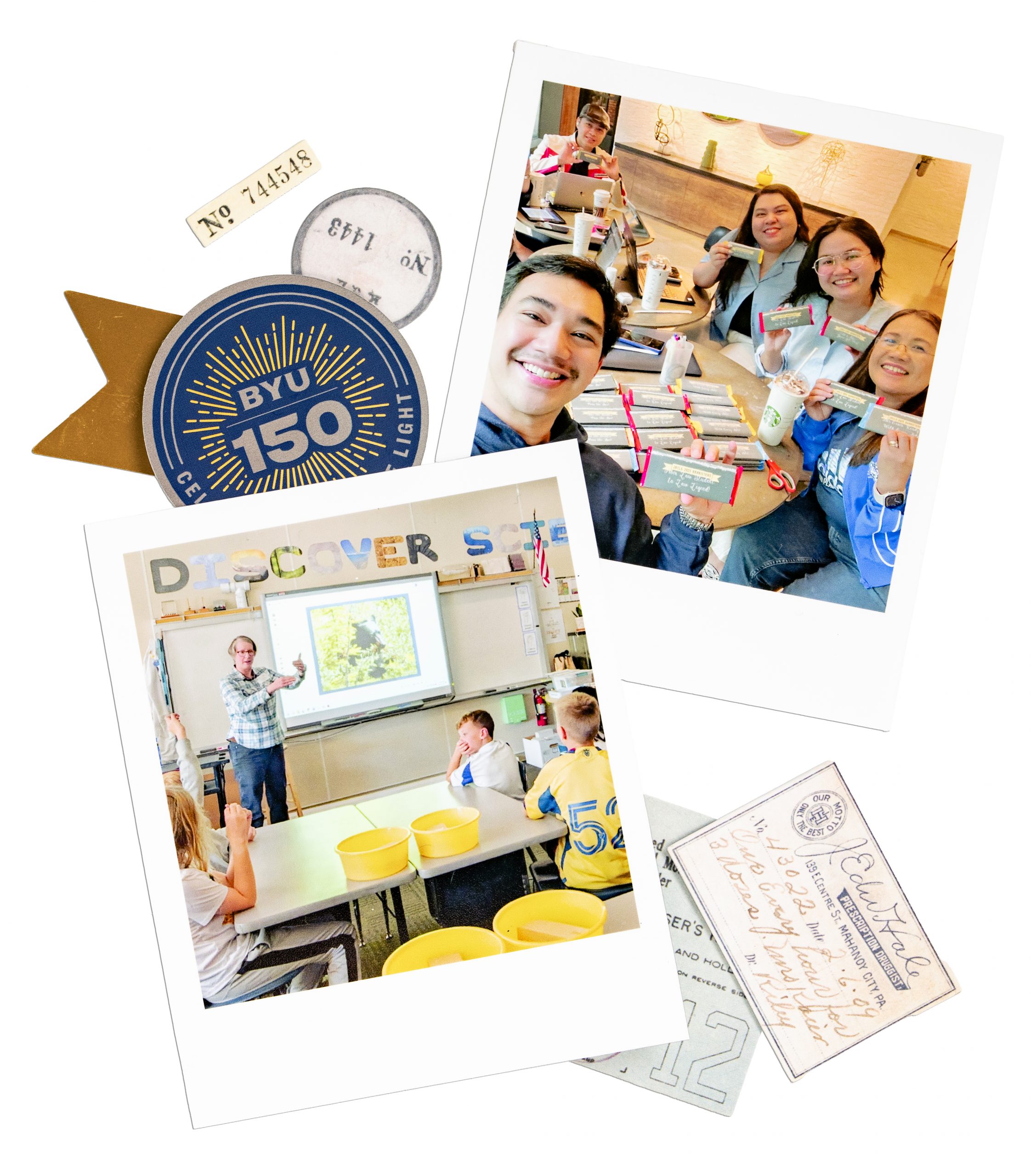
Top: Attorney Mary Ann L. Ojeda (LLM ’25) helped wrap 100 chocolate bars with inspirational quotes from lawyers to give to J. Reuben Clark Law Society barristers. Photo courtesy Mary Ann Ojeda.
Bottom: Janene Auger (BS ’91, MS ’94), a technical editor for the Monte L. Bean Life Sciences Museum, guest- taught a class of fifth graders about the food habits of American black bears. Photo courtesy Janene Auger.
Good Sports
As Texas Tech prepared to face BYU in a November football match, its students geared up for their traditional “hate week” to raise school spirit before the game. At the same time, BYU fans were learning about a Go Fund Me campaign created by the Texas Tech team barber to support his wife, who had recently been in a life-threatening car accident. Cougar fans poured in donations to support the family, and the fundraiser reached nearly $200,000, far exceeding its initial $25,000 goal. “Hate week is officially cancelled,” a Texas Tech fan posted on X. “It will be replaced by mild ribbing and deep respect week.”
At home and away games alike, alumni looking to serve are changing the atmosphere of college sports. When visiting fans come to LaVell Edwards Stadium, they’re welcomed with BYU Creamery ice cream. At away games, fans donate clothing, books, and food to the communities of rival teams through Cougs Care tailgates organized by BYU Alumni and directed by local chapters. And in spontaneous bouts of charitable giving, fans have shown up to help: raising $80,000 to support a Kansas State quarterback’s high school principal in a fight against cancer in 2024 and donating thousands of dollars in $30.17 donations—the final score in BYU’s last football game against Penn State—to the Penn State College Food Bank after BYU football head coach Kalani F. Sitake (BA ’00) turned down a job offer at the school.
It’s about people, Alycia McClurg, BYU’s Cincinnati alumni chapter secretary, told the Deseret News after a Cougs Care coat drive in November. “We want to be good neighbors and benefit the communities that we live in now.”
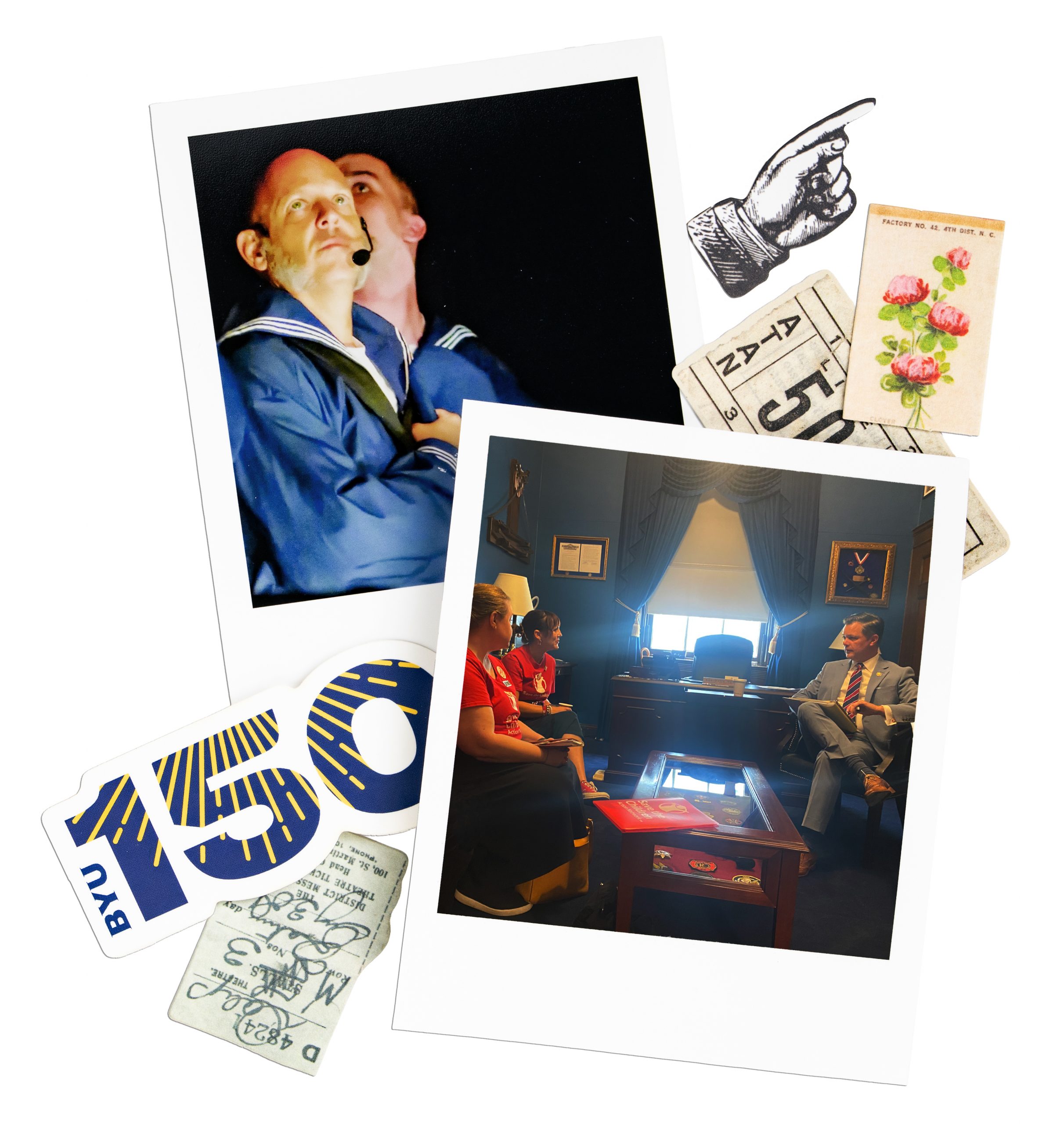
Top: Paul E. Webb, BYU football athletic trainer, built stage props and played three different roles in a production of Ephraim Hanks, the Musical, written by a couple in his stake. Photo courtesy Paul Webb.
Bottom: Tiffany Brown Welch (BS ’01) traveled to Washington, DC, to advocate for increased access to early childhood education and nutrition. Photo courtesy Tiffany Welch.
Side Quest
BYU freshman George O. Liddle (’29) is rising through the ranks on the BYU 150 Passport. Along with logging service hours, more than 2,000 BYU community members complete challenges in a friendly competition to celebrate 150 years of BYU. Holding 10th place overall, Liddle has completed 59 of the 150 available challenges. The challenges have helped him feel connected to BYU. “It’s given me direction,” he says, “little side quests to do throughout the week.” Join Liddle on a journey around BYU campus.

Feedback Send comments on this article to magazine@byu.edu.
More Articles